 Hispanic Heritage Month is here, and at A.K. Smiley Public Library, we have plenty of new books for you to read by Latinos across the wide spectrum of genres.
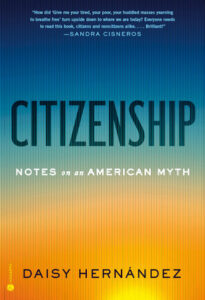
Daisy Hernandez’s “Citizenship: Notes on an American Myth” explores the culturally relevant topic of citizenship in the United States through the lens of watching her parents own “lucky” paths to citizenship. The idea of citizenship in the United States has a storied history, historically used to deny personhood and humanity to many people of color and immigrants, from slaves and their children to Chinese immigrants and many more. This book explores the meandering waves of citizenship and how it has yet again found itself on the national stage with ideas like repealing birthright citizenship. Hernandez herself brings up the process of applying for Colombian citizenship, unsure of what the future holds in the United States. It’s an interesting exploration of a topic many Latinos may find relevant.
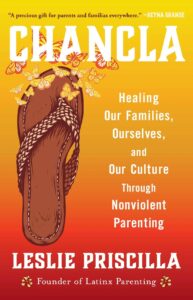 “Chancla: Healing our Families, Ourselves, and Our Culture Through Nonviolent Parenting” by Leslie Priscilla will make some readers squirm as they come face to face with some cultural practices that many people still defend. Priscilla asks questions that look at some of the harder topics of parenting that can exist in many Latino families. Not every Latino grew up with corporal punishment as the norm, but for many, the chancla, cinturon, or a branch were all a very difficult reality, and an example of violence becoming tangled with cultural identity. How many times do you say to yourself, “Well, I turned out fine” or “ they did it because they loved me”? But was it necessary? And is it still a necessary practice to carry into the future? Reader, be warned: you may be confronted with harsh realities. Even those with no children of their own may find help healing broken and streaked smatters of their own childhoods with this book. Parents fighting demons of cultural practices past and present may find this helpful in finding their own parenting styles.
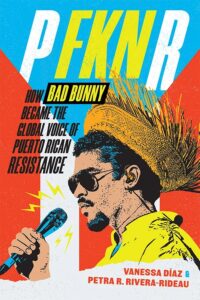 “PFKNR: How Bad Bunny Became the Global Voice of Puerto Rican Resistance” by Vanessa Díaz flows easily from one topic to the next, connecting conversations about Bad Bunny’s personal history and how it connects to the grander story of Puerto Rico. PR might stand for Public Relations because this book feels very much like a love letter to Bad Bunny! Whether you like his music or not you’ll definitely have a kinder view of the artist after this. It highlights Bad Bunny’s humble appreciation and admiration for the Boricua artists that came before him. As well as providing context for his advocacy and for the Puerto Rico he grew up in. The combination of austerity measures, extensive debt, and American financial colonialism all created a Puerto Rico that found itself in dire straits. The book follows the historical context that raised Bad Bunny without feeling like a sticky history textbook that bogs you down in unnecessary details. Highly recommended for fans of his music as well as people invested in the story of Puerto Rico. ¡También está disponible en español!
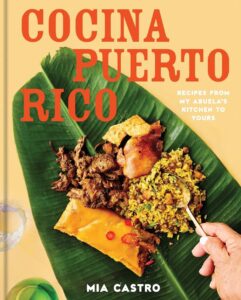 “Cocina Puerto Rico” by chef Mia Castro offers up rich and easy-to-follow recipes from Castro’s home, Puerto Rico. She has worked under the likes of Wolfgang Puck and received praise from Gordon Ramsay himself. The recipes are rich in her personal history and spice and offer a beautiful culinary insight into Puerto Rican food, an underrated culinary giant in itself. The pictures are beautiful and mouth-watering, colorful and vibrant recipes just like the culture that inspired them. It starts with lots of basic information on ingredients and moves on to how to use them. Highly recommended for anyone wanting a basic introduction to Puerto Rican food!
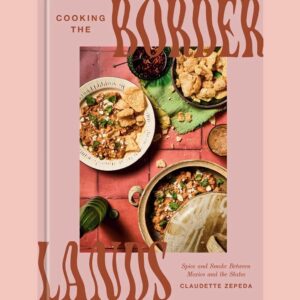 “Cooking the Borderlands” highlights chef Claudette Zepeda’s culinary journey as someone raised between Mexico and the United States, who experienced the cultural meld of the people who live along the border. Food isn’t just Mexican or just American; it’s a combination that parallels the culture and the people. We can’t label them as just one thing or just another, separated by an invisible line made visible by the Treaty of Hidalgo Guadalupe. The book starts off with basics that can be found on many a Mexican family’s table: tortillas, salsas, arroz y frijoles. Zepeda invites readers to use her recipes as outlines for their own, replace, substitute, and make what makes you happy and what you will eat. Full of delicious recipes, homey pictures, and a wonderful story of two worlds becoming one, this book is highly recommended for anyone who enjoys Mexican-American cooking.
There’s plenty to choose from this Hispanic Heritage Month at A.K. Smiley Public Library.
Ruth Aguilar is a library specialist at A.K. Smiley Public Library and is proudly Mexican-American.