These lovely, warm-cool crisp days falling quickly into the short, darkened cover of winter remind me of the coming holidays and getting together with family and friends. We will gather for warmth of all kinds, and comfort each other with the sharing of home-made meals and desserts, revering the tastes of our shared traditions, harkening back to our ancestors’ original homelands.
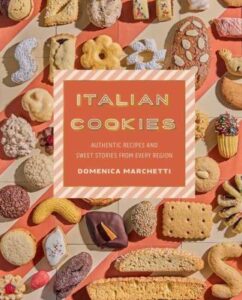 Consequently, one of our new cookbooks at Smiley Library caught my attention immediately, filling me with lovely memories of my Italian grandmother. “Italian Cookies: Authentic Recipes and Sweet Stories from Every Region” by Domenica Marchetti is oozing with a variety of cookie recipes from Italy and I had to investigate to find if included were any I remember Grandma making from scratch in our kitchen.
I remember a lot of dough being rolled out on the countertops while flour was endlessly sprinkled upon it. Grandma was a superhero who could transform the glob of dough into the thinnest layers of deliciousness that would become either, long strands of spaghetti, generously fat envelopes of ravioli she would stuff with ricotta cheese, and most often, delightfully crisp cookies that we called pizzelles!
Flavored with the seeds or oil of a magical (to a child!) herb called anise, these beautifully lacey creations crafted by Grandma’s loving hands are often described as resembling waffles. They are made now with an electric appliance that looks like a waffle maker. But I remember Grandma making hers with an iron that clasped the dough ball on two patterned sides and produced just one single pizzelle; it had a long handle and she would ‘bake’ the cookie by holding it over the flames of the stove burner.
But I digress from Marchetti’s wonderful cookbook and my search for familiar recipes. I did find pizzelles (p.164)! The author includes it in the section, Cookies of the South (where Grandma was from!), Recipes and Stories from Abruzzo, Basilicata, Calabria, Campania, Molise, and Puglia. Featured next, in Cookies of the Islands, Sardinia and Sicily, are my grandma’s fig roll cookies which the author calls Cuccidati (p.183). I like to imagine that Grandma made them for my Sicilian grandfather. When he had a chance, Grandpa did grow a few fig trees in their yard here in Redlands…
 Marchetti has designed her book this way, region by region, giving us not only a table of contents of the recipes to be featured, but teaching a bit about the region’s geography and history and providing a charming story of a local baker. She creates a warm, comfy feeling of not only learning new recipes, but getting to know the people behind the recipes — so, you know, you become part of ‘la famiglia!’
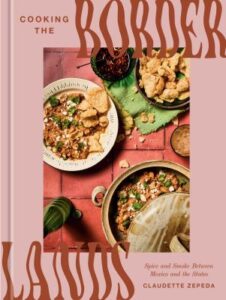
Additional special cookbooks that tell the stories of their regions through food include “Cooking the Borderlands: Spice and Smoke Between Mexico and the States,” written by Top Chef star and Iron Chef Mexico finalist Claudette Zepeda who makes an impressive debut telling the story of dishes shared by intertwined cultures along the Mexican American border.
The chef, with her irreverent sense of humor, presents recipes like Coahuila’s Esquites (Street Corn) and Las Calandrias Caballitos (Chicken Sopes). Through these and at least a hundred other recipes, Zepeda shines a light on the fluidity and flexibility between the two nations and demonstrates how vital the imaginary line that runs through the borderland from California through Texas is in American culture.
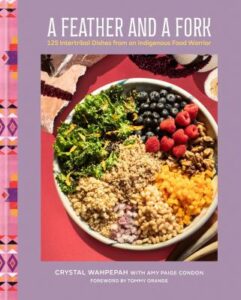 Finally, we come to an offering of native specialties with “A Feather and a Fork: 125 Intertribal Dishes from an Indigenous Food Warrior” by Crystal Wahpepah, member of the Kickapoo Nation of Oklahoma, and creative force behind dishes served at her restaurant, Wahpepah’s Kitchen, based in Oakland, CA. The chef has used her growing platform to tell the little-known history of Oakland’s tight-knit Native American communities, which were relocated from reservations across the country to the San Francisco Bay area in the 1950s.
The cookbook includes 125 recipes, such as Indigenous Popcorn Balls with Edible Flowers, Bison Roast with Chokeberry Rub, and Acorn Muffins. Developed in collaboration with ethnobotanist and food sovereignty advocate Linda Black Elk, she explores the environmental, spiritual, physical, and social benefits of each dish as well as raise awareness of and support for indigenous food producers who are preserving heirloom foods and traditions.
Chef Wahpepah encourages us to “eat with the seasons, cure your disconnection with the land, and cook colorful, delicious food rooted in the oldest traditions” – just like Grandma used to make!
Teresa Letizia is a library specialist at A.K. Smiley Public Library.