Walking through the Redlands Bowl amphitheater today I read the inscription engraved over the stage, “Without vision, a people perish.” I pondered the meaning of the biblical verse. Does it mean that failing to examine ourselves, our culture, and the possibilities of our future, will lead to our downfall? Hm, too bad we can’t ‘phone a friend’ from ancient Rome…
Oh, I thought, in a sense, we can do just that—by crossing the street to Smiley Library. We can probably find some ancient Roman writings, or some historical analyses of ancient Rome right inside that building. If we study with these tools, we can learn from our ancient friends. Libraries are tool shops of critical-thinking implements for the self-examination that we need to survive. “Critical thinking” is defined as “disciplined thinking that is clear, rational, open-minded, and informed by evidence.” With such discipline, we can teach ourselves and create that needed “vision.”
 Of course, our society relies heavily on professional teachers who take on that burden of creating critical thinkers of us. As most are preparing now or have already begun teaching school for the 2023-24 year, we really must honor them, (thank you, teachers!) for it is an unenviable task, and a gift, to be able to pull out of each of us individuals our own unique vision and voice.
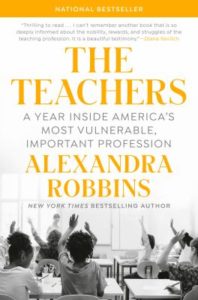
To gain some insight into what these heroes go through, we return to the library for a tool of learning. New to Smiley Library is, The Teachers: A Year Inside America’s Most Vulnerable, Important Profession, a new bestseller by investigative journalist and substitute teacher Alexandra Robbins. She provides detailed accounts of the lives of three teachers working in various regions of the country over a period of a school year. Robbins describes everything from the challenges they encounter in their work to how that work encroaches on their personal lives (as well as busting the myth that teachers laze around all summer). She sprinkles in interviews with additional teachers nationwide who share their challenges and wins. Robbins also provides essays on many of the big issues facing the profession today, everything from “school violence to outrageous parent behavior to inadequate support, staffing, and resources.”
 You know, whether we are studying for ourselves in the library, or presiding over a classroom of students, we, each of us, is a teacher. Not all may be cut out to be a professional one, but all of us are teachers. It may be as simple as your new co-worker asking you how to complete a task, or a tourist on the street asking if you know how to get to the best sandwich place in town. You think on your feet, put yourself in their place, and try to lay out the path for them.
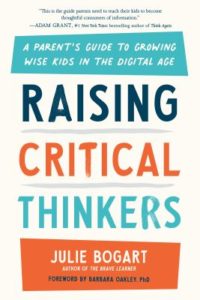
 One group who does this type of teaching, as well as a more formal kind, are parents, and others in the village who help raise our children. We have a book for them too, Raising Critical Thinkers: A Parent’s Guide to Growing Wise Kids in the Digital Age. Curriculum developer and longtime homeschooling parent Julie Bogart provides methods in this guide for “objectively evaluating data, learning investigative skills by making room for dissenting points of view, examining one’s own prejudices and biases, and understanding how bias plays into opinion making.” And she makes it fun with stories and activities for students of all ages.
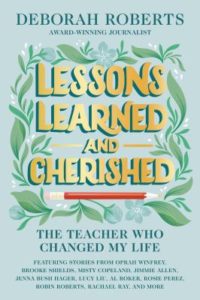
Finally, Lessons Learned and Cherished: The Teacher Who Changed my Life is a feel-good and inspiring little book by ABC News journalist Deborah Roberts who curates a collection of essays and musings from celebrity friends and colleagues that share “how teachers changed them, imparted life lessons, and helped them get to where they are today.” Roberts has made a donation to DonorsChoose.org, a non-profit that encourages people to empower public school teachers by funding their classroom resources.
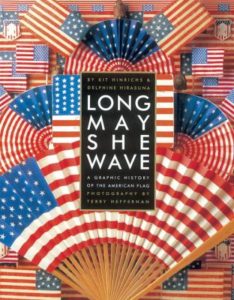

 As I’m writing this from the Library, I am so thankful to be able to look out the window at the green space of Smiley Park around us. Not all of us are so lucky as to be able to experience an expanse of living and breathing grasses, plants, and trees at our places of work, or even at our homes. Though the Park is not as huge as, say, a national park, it does its job and provides a healing respite for us, even those of us just looking out the window at it.
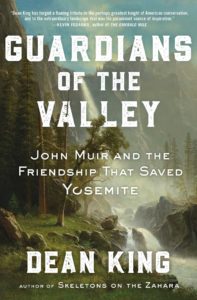 I’m really looking forward to
 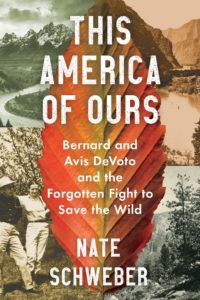 Fast-forward half a century to the setting of journalist Nate Schweber’s
 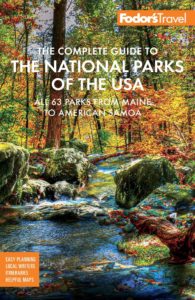 Others resources for park visitors include:
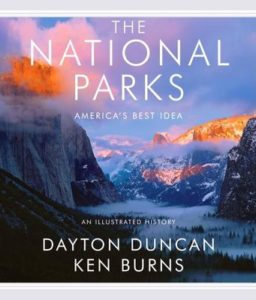 You may also want to look for Ken Burns’ spectacular documentary on the national parks on PBS, or on a streaming platform, or his book in our catalog,
 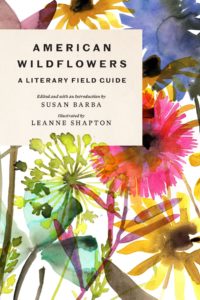 As a reminder, the Library holds a lot more items on natural sites to explore, whether it’s national parks, state parks, wilderness areas, hiking trails, particular flora and fauna, etc. For example, with our recent wet weather and the super blooms it is bringing, you may want to know more about wildflowers and where to find them; hopefully some are growing within these parks. Look for
 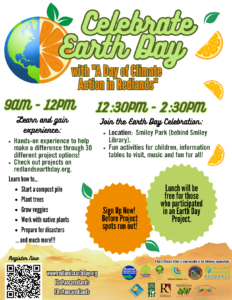 ♥ Celebrate Earth Day in Redlands on the morning of Saturday, April 22, by participating in your choice of a variety (dozens!) of hands-on events around town sponsored by ANCA (Accelerate Neighborhood Climate Action) and many other Redlands environmental organizations. Refer to